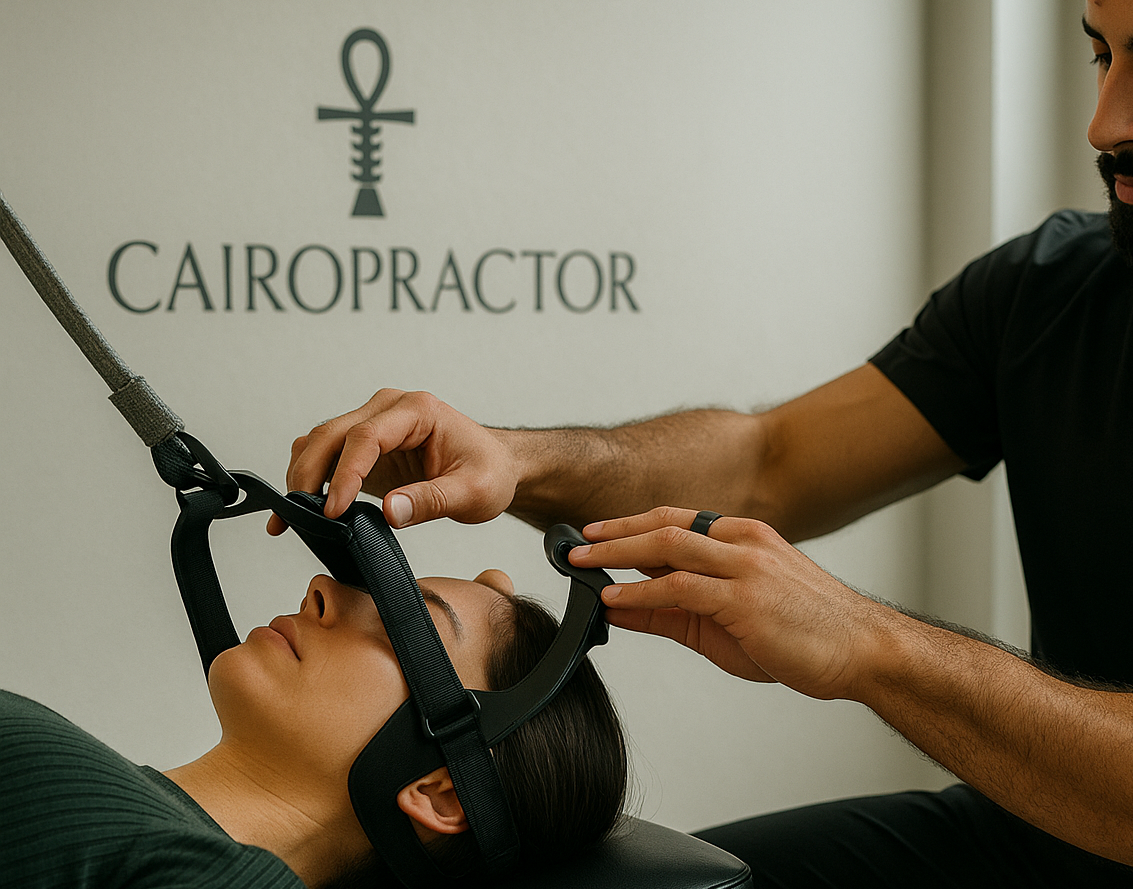
Finding balance from the top down.
Your nervous system connects every function in your body — from muscle control to pain perception. When spinal or postural imbalances disrupt this connection, it can lead to headaches, dizziness, or neurological tension. Chiropractic care helps restore alignment, improve circulation, and support the body’s natural healing response.
Headaches & Migraines
Definition:
Headaches and migraines can stem from many causes — including muscle tension, poor posture, or restricted neck movement. Tension headaches often develop from stress and prolonged screen time, while migraines can be influenced by neurological and vascular factors.
Symptoms:
- Dull or throbbing pain at the base of the skull or behind the eyes
- Sensitivity to light or sound
- Neck stiffness or muscle tightness
- Visual disturbances (for migraines)
Treatment Approach:
Dr. Kareem focuses on relieving tension in the cervical spine and surrounding muscles to reduce pressure and restore normal function. Chiropractic adjustments, soft tissue work, and lifestyle guidance (ergonomics, hydration, posture correction) help decrease headache frequency and intensity.
Concussion Management
Definition:
A concussion is a mild traumatic brain injury caused by impact or rapid movement of the head. Even after initial symptoms fade, post-concussion effects can persist due to neck stiffness, vestibular imbalance, or nervous system disruption.
Symptoms:
- Headaches, dizziness, or blurred vision
- Difficulty concentrating or fatigue
- Neck pain and restricted motion
- Sensitivity to light or noise
Treatment Approach:
Chiropractic care complements medical management by addressing the neck and spine components of concussion recovery. Treatment may include gentle cervical adjustments, soft tissue release, and exercises to restore balance, coordination, and neck mobility. Care is always tailored to the patient’s recovery stage and comfort level.